Squirrels, Raccoons, and Your Roof: Keeping Critters Out This Winter
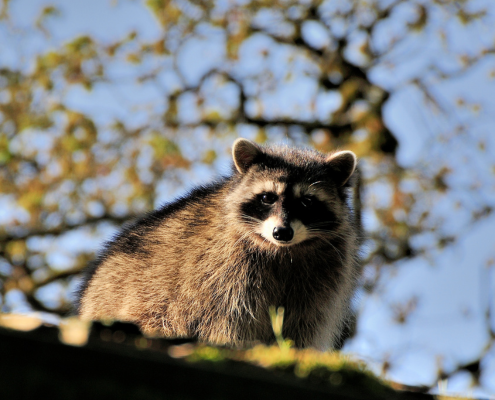
Squirrels and raccoons are looking for a warm place to spend the winter, and your attic is on their list. Once the nights start dipping into the 30s, the critters that spent all summer in the trees start shopping for somewhere drier and warmer, and a roofline with a soft spot or a loose panel looks like an open door.
The trouble doesn’t stop at a few noises overhead. Animals in the attic chew through wood, tear up insulation, block vents, and widen small gaps into openings that let in water and cold air. By the time most homeowners hear them, the damage has already started.
Here’s who’s most likely trying to move in, how they get there, and how to close your roof up before winter sets in.
The Usual Suspects (and How They Get In)
Squirrels
Squirrels are the most common roof intruders we see, and they’re persistent. They look for a weak spot, usually a soft or rotted piece of fascia, a corner where the soffit meets the roofline, or a gap where the roof meets a wall, and then they chew until it’s big enough to squeeze through. Their teeth never stop growing, so wood, vinyl, and even thin aluminum don’t slow them down much. Overhanging branches give them a direct path onto your roof.
Raccoons
Raccoons don’t chew their way in so much as pry. They’re strong, and their front paws work almost like hands. A loose soffit panel, a roof vent with a flimsy cover, or an uncapped chimney is all they need. Once inside, a raccoon can tear up insulation, rip through ductwork, and leave a much bigger hole than the one it found.
Mice and rats
A mouse can fit through a gap about the size of a dime. They often climb up siding or downspouts and slip in through small openings at the eaves, gaps around vent pipes, or spaces behind loose gutters. You may never see the entry point, but you’ll find signs of them in the attic.
Birds
Starlings and sparrows like to build nests in gutters, roof vents, dryer vents, and gaps under loose shingles or flashing. A nest in a vent blocks airflow your attic depends on, and a nest in a gutter traps water against your roof edge.
Bats
Bats can slip through openings as narrow as a pencil, often near the roof peak, ridge vent, or chimney. If you suspect bats, don’t try to handle it yourself. Call a licensed wildlife removal company, since there are rules about when and how bats can be removed.
Signs You Already Have a Guest
Critters are good at staying out of sight, but they leave clues. Listen and look for:
- Scratching, scurrying, or thumping overhead, especially around dawn and dusk when squirrels come and go. Heavier thumps at night usually mean raccoons.
- Chewed or splintered wood along the fascia, soffit corners, or roof edge.
- Soffit panels or vent covers that are bent, loose, or hanging down.
- Shingles that look torn, lifted, or scattered in the yard after a calm night with no wind.
- Nesting material in the attic, like shredded insulation, leaves, or twigs.
- Droppings or a strong ammonia smell in the attic or near the eaves.
- Stains or damp spots on the ceiling under the area where they’ve been getting in.
If you notice any of these, act quickly. An entry point that’s small in October tends to get bigger by spring.
How to Keep Critters Out (In the Right Order)
Step 1: Get them out before you seal anything
This is the mistake we see most often. A homeowner finds the hole, patches it, and traps an animal inside. A trapped squirrel or raccoon will chew or tear a brand-new opening to get out, sometimes right through your roof deck or ceiling. If there are babies in the attic, the mother will do whatever it takes to get back to them.
If you think something is living in your attic now, call a licensed wildlife removal company first. Many use one-way doors that let animals leave but not come back. Once the attic is empty, it’s time to make repairs.
Step 2: Repair the damage they left behind
Chewed fascia, broken soffit panels, and torn shingles all need to be properly repaired, not just covered with a scrap of wood. Rotted or soft fascia is especially important to replace, since it’s the easiest spot for the next squirrel to chew through. Our soffit, fascia, and gutter crew can replace damaged sections and match them to the rest of your home.
Step 3: Close the easy openings
- Cap your chimney with a mesh-sided cap to keep out raccoons, birds, and bats.
- Upgrade vent covers to sturdy metal guards. Thin plastic covers are easy to pry or chew open.
- Seal gaps where the roof meets walls, dormers, and the soffit, and around vent pipes.
- Secure loose soffit panels and gutters that have pulled away from the house.
Step 4: Make your roof harder to reach
Trim tree limbs back so they’re well away from the roofline. A branch hanging over your roof is a squirrel highway. Keep gutters clean so they don’t become a nesting spot, and remove anything that lets animals climb, like trellises or woodpiles stacked against the house.
Animal damage is just one of the ways roof leaks get started. For a broader look, see our post on the common causes of roof leaks and how to identify them.
Close Up Your Roof Before Winter
Once the critters are out, 1st Choice Roofing and Construction can repair the damage and seal up the openings so they don’t come back. We’re based in Arnold and work on homes across the St. Louis area. Schedule a free inspection or call us at 636-282-0090.