Where Roof Leaks Start: A Homeowner’s Guide to Roof Penetrations
Your roof isn’t one solid surface. It has several intentional openings built into it. And if you’ve ever had a leak, there’s a good chance it started at one of them. Understanding where those weak points are is the first step to staying ahead of water damage.
They’re called roof penetrations, and they exist wherever something passes through the roof surface: a chimney, a plumbing vent, a skylight, an exhaust fan. Each one requires careful sealing to keep water out. When that sealing wears down or was never installed correctly to begin with, water finds a way in.
Here’s a breakdown of the most common roof penetrations on a residential roof, what to watch for, and why they deserve regular attention.
What Is a Roof Penetration?
A roof penetration is any point where an object or structure passes through the roofing material. Because the roof membrane or shingles have to be cut or worked around these openings, they rely on flashing and sealants to stay watertight.
Flashing is typically a thin layer of metal — often aluminum or galvanized steel — installed around penetrations to direct water away from the opening and down the roof slope. Over time, flashing can corrode, pull away, or crack. Sealants dry out and shrink. When either fails, water moves in.
Chimneys
The chimney is one of the most common sources of residential roof leaks, and one of the most overlooked. Because chimneys are large, rigid structures that don’t move with the natural expansion and contraction of a roof, the flashing around them is under constant stress.
What to watch for around your chimney:
- Flashing that has pulled away from the chimney base or the surrounding shingles
- Visible gaps or cracks in the mortar where the flashing meets the masonry
- Rust stains on the chimney exterior, which can indicate water is already getting in
- Water stains on interior ceilings near the fireplace
Even a small gap in chimney flashing can allow significant water intrusion, especially during wind-driven rain.
Plumbing Vents and Pipe Boots
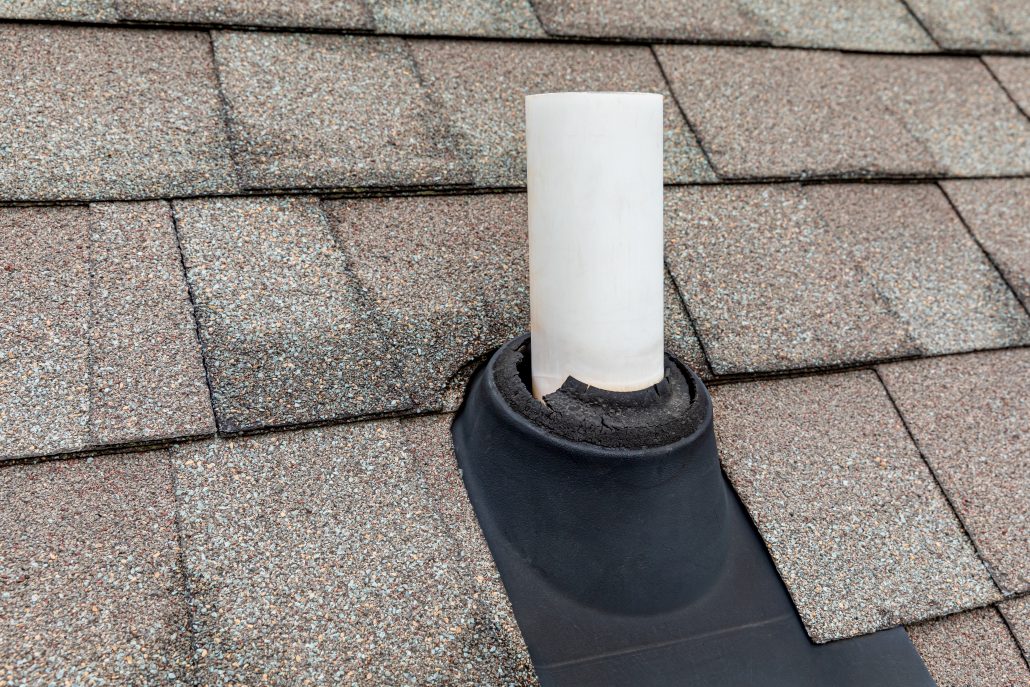
Somewhere on your roof, there are pipes sticking up. Those are vents for your plumbing and gas systems. Where they break through the roofline, they’re sealed with what’s called a pipe boot. A pipe boot is a snug rubber or metal collar that keeps water from following the pipe inside.
Rubber pipe boots are one of the most common failure points on a residential roof because the rubber degrades over time. Especially with the UV exposure and temperature swings we see here in St. Louis. Signs of a failing pipe boot include:
- Visible cracking or shrinkage in the rubber collar
- The collar pulling away from the pipe or lifting off the shingles
- Water stains on the ceiling directly below a vent pipe
- Daylight visible around the pipe from the attic
Pipe boot replacement is one of the more straightforward roof repairs, but it has to be caught before water has time to damage the decking beneath it.
Skylights
Skylights add natural light and curb appeal, but they’re also a significant penetration in the roof surface. They require flashing on all four sides and a watertight seal at every seam. When any part of that system breaks down, water doesn’t wait long to find its way in. The reasoning could be from age, a bad installation, or storm damage.
Skylight leak signs to look for:
- Water staining or discoloration around the interior frame of the skylight
- Condensation inside the glass, which may indicate a seal failure
- Flashing that has lifted or separated from the surrounding shingles
- Soft or spongy decking around the skylight when accessed from the attic
It’s worth noting that not all skylight leaks originate at the skylight itself. Sometimes condensation from poor attic ventilation mimics a skylight leak. A professional inspection by 1st Choice Roofing and Construction will identify the true source.
Exhaust Vents and HVAC Openings
Kitchen and bathroom exhaust fans, as well as attic ventilation systems, all require openings in the roof. Like the pipe boots mentioned above, these are sealed with flashing and sealant that breaks down over time.
What to check around exhaust vents:
- Flashing that has cracked, rusted, or separated from the surrounding surface
- Missing or deteriorated sealant at the vent collar
- Debris buildup around the vent that could trap water
- Any signs of moisture in the attic directly below the vent
A Note for Right Now: Storm Season Is Here
While roof penetrations are a year-round concern, storm season puts every one of these weak points to the test. Wind-driven rain, hail, and severe weather have a way of finding gaps that would otherwise go unnoticed on a calm day.
If you haven’t had your roof inspected recently, now is the time! The 1st Choice team can walk through every penetration point on your home — chimneys, pipe boots, skylights, vents. You’ll get an honest assessment of what’s holding up and what needs to be addressed before the next storm rolls through.
Schedule Your Roof Inspection with 1st Choice
Roof penetrations are the most common source of residential leaks, and also the most preventable. The 1st Choice crew knows exactly where to look and what to look for, so small issues get resolved before they become major repairs.
Contact 1st Choice Roofing and Construction today to schedule your inspection — and get ahead of the next storm before it finds the weak spots first.