Roof Flashing and Edge Protection: What Homeowners Need to Know
When most people think about their residential roof, they picture shingles. And while shingles are important, they’re only part of the story. Some of the most critical components of a well-built roof are the ones you barely notice, such as flashing and edge protection. These elements work behind the scenes to keep water out, protect your home’s structure, and extend the life of your roof.
Here’s what you need to know about both.
What Is Roof Flashing?
Flashing is thin metal material that’s installed at the most vulnerable points of your roof. It is typically made from galvanized steel, aluminum, or copper. Anywhere there’s a joint, transition, or penetration, water has an opportunity to sneak in. Flashing covers those vulnerable spots and channels water away from the roof’s most exposed points.
Common areas where flashing is installed:
- Chimneys — One of the most frequent sources of roof leaks. Step flashing and counter flashing work together to create a watertight seal around the chimney base.
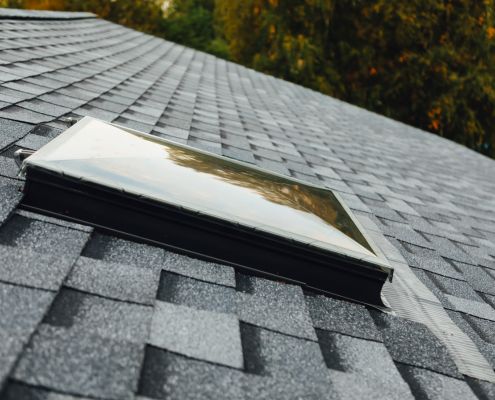
- Skylights — The perimeter of a skylight requires careful flashing to prevent water from pooling and seeping inside.
- Roof valleys — Where two slopes come together, water from both sides funnels into one path. Valley flashing manages that concentrated flow and directs it off the roof.
- Roof-to-wall transitions — Anywhere a roof meets a vertical wall, such as a dormer or addition, flashing bridges the gap.
- Vent pipes and HVAC penetrations — Every pipe or duct that exits through the roof is a potential entry point for water without proper flashing.
Flashing problems are a leading cause of roof leaks. They’re often the culprit when a homeowner reports a leak even after shingles appear to be in good condition. When flashing is improperly installed, corroded, or pulling away from the surface, water will eventually find its way in.
What Is Edge Protection?
Edge protection refers to the components installed along the perimeter of your roof, specifically drip edge and rake edge metal. These pieces may be small, but they play a significant role in how your roof performs.
Drip edge is installed along the eaves (the lower horizontal edges of the roof) and directs water away from the fascia and into the gutters. Without it, water can wick back under the roofing materials and cause wood rot along the roof deck and fascia boards.
Rake edge runs along the sloped sides of the roof. It protects the roof deck from wind-driven rain and helps prevent shingles from curling or lifting at the edges over time.
Together, these components:
- Stop water from working its way under shingles at the roof’s edge
- Protect the fascia and soffit from moisture damage
- Give the roof a clean, finished appearance
- Reduce the risk of wind damage along the most exposed areas of the roof
Why Proper Installation Matters
Both flashing and edge protection are only as effective as the installation. Even quality materials will fail if they’re not properly fastened, sealed, and integrated with the surrounding roofing system.
Common installation mistakes include flashing that isn’t embedded in sealant, drip edge installed over (rather than under) the underlayment at the eaves, or metal that isn’t overlapped correctly at seams. These errors may not cause problems right away, but they create vulnerabilities that worsen over time. This is especially due to Missouri’s freeze-thaw cycles, heavy spring rains, and summer storms.
Signs Your Flashing or Edge Protection May Need Attention
Not sure if your current roof has a problem in these areas? Watch for:
- Water stains on interior ceilings or walls near chimneys, skylights, or exterior walls
- Visible rust, gaps, or lifting along roof edges
- Missing or damaged drip edge
- Loose or separated flashing around chimney bases or vents
- Granule buildup in gutters near roof edges (can indicate shingle damage from water backflow)
If you notice any of these warning signs, it’s worth having 1st Choice Roofing and Construction take a look before a small issue becomes a major repair.
The Bottom Line
A roof is only as strong as its weakest point. Shingles get most of the attention, but flashing and edge protection are what keep your roof, and your home, truly protected. Investing in quality installation and periodic maintenance of these components pays off in fewer leaks, less structural damage, and a longer-lasting roof overall.
Have questions about your roof’s flashing or edge details? The team at 1st Choice Roofing and Construction is here to help. Contact us today to schedule an inspection and get an honest assessment of your roof’s condition.